How Is Rye Whiskey Made?
You make rye whiskey by fermenting a mash bill containing at least 51% rye grain, often mixed with malted barley to help convert starches to sugar. The mash is sometimes sour mashed, adding some old mash for consistency and flavor.
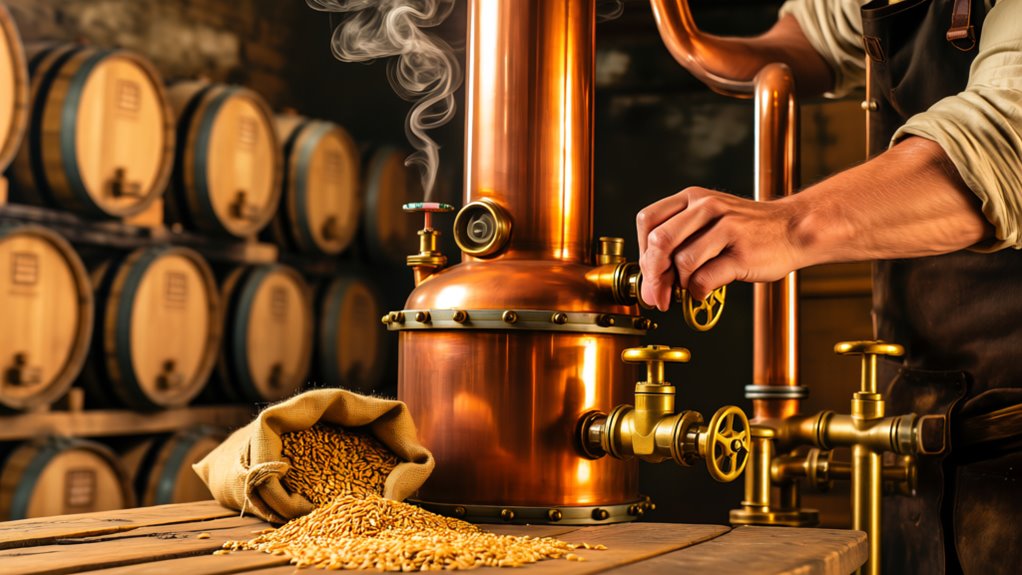
After fermenting, it’s distilled, usually in copper stills, to capture rye’s spicy, dry character. Then, it’s aged in new charred oak barrels, developing complexity and color.
If you want to understand how regional styles and grain choices shape rye’s unique taste, there’s more to discover.
What Defines Rye Whiskey
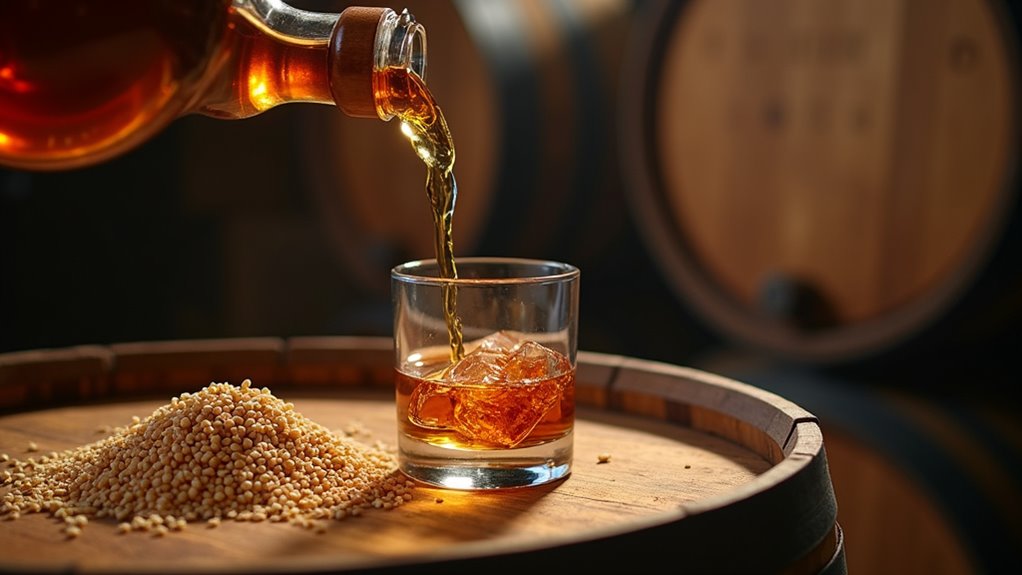
What makes rye whiskey stand out? It’s the rye grain that plays the starring role, making up at least 51% of the mash bill in U.S. rye whiskey. This high rye content gives the spirit its distinctive spicy and dry flavor profile, which contrasts sharply with the sweeter notes found in bourbons.
When you explore rye whiskey, you’ll notice the influence of its aging process too. It’s aged in new charred oak barrels, which adds complexity and depth without overshadowing the grain’s signature character. The mash bill isn’t just about rye; it’s a precise recipe that combines rye with other grains, but the rye grain remains the defining ingredient.
While Canadian and other international ryes might not rely heavily on rye grain, they still aim to capture that classic rye flavor profile. So, understanding what defines rye whiskey helps you appreciate its unique taste and production tradition.
Grain Selection and Mash Bill Composition
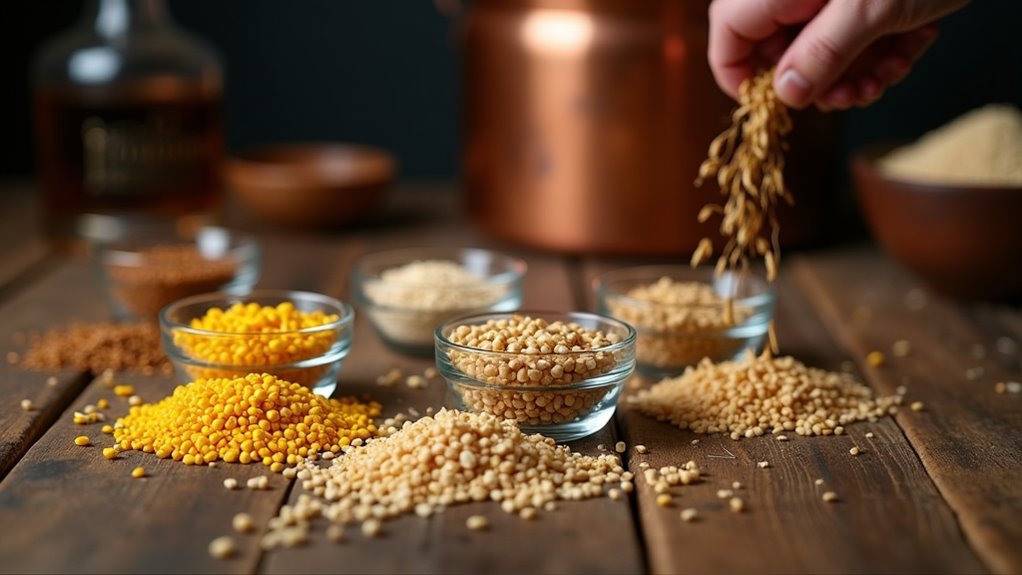
How do distillers decide on the perfect mix of grains for rye whiskey? It all starts with careful grain selection. By law, rye whiskey must have at least 51% rye content in its mash bill, ensuring that signature spicy character.
Distillers then balance this with other grains, typically corn around 39%, and malted barley at about 10%, to influence flavor and optimize fermentation. The corn adds sweetness, while malted barley contributes enzymes that help break down starches during fermentation.
Some craft distillers experiment by adding grains like wheat, oats, or rice to create unique twists within rye whiskey styles. Your choice of grain ratios directly impacts the whiskey’s flavor profile and consistency.
The Sour Mash Process
When making rye whiskey, you’ll use the sour mash process to keep fermentation stable and consistent. By adding a bit of old mash to the new batch, you control pH and support healthy yeast growth. This not only prevents unwanted bacteria but also helps create a uniform flavor in every batch.
Purpose of Sour Mash
Why does the sour mash process play such an essential role in rye whiskey production? It’s all about creating the ideal environment for fermentation. By mixing a portion of previously fermented mash with fresh grains, sour mash helps maintain proper pH control, which prevents harmful bacteria from spoiling the batch.
This acidic environment encourages healthy yeast activity, much like sourdough bread making. When you use sour mash, you’re not just speeding up fermentation; you’re also ensuring each batch tastes consistent. This consistency is fundamental for producers aiming to deliver the same quality rye whiskey every time.
Fermentation and Yeast
Although you might not see it, the sour mash process plays a crucial role once fermentation begins in rye whiskey production. By adding a portion of previously fermented mash, the sour mash helps control pH levels, inhibit harmful bacteria, and promote consistent fermentation.
Here’s how yeast and fermentation work together in this process:
- Yeast is introduced to the sour mash, converting sugars from rye, corn, and barley into alcohol and carbon dioxide, driving alcohol production.
- The sour mash ensures a stable environment for yeast, leading to reliable fermentation and consistent results.
- Fermentation time and yeast strain influence the development of rye whiskey’s signature spicy and fruity notes.
This careful balance makes sure your rye whiskey has quality and character every time.
Consistency and Flavor
Because the sour mash process mixes some of the previous batch with fresh grains, it helps keep the flavor of your rye whiskey steady and reliable. This method controls pH levels during fermentation, which guarantees consistent yeast activity and a predictable process.
By using sour mash, you introduce beneficial bacteria that prevent spoilage microbes, improving fermentation efficiency. This consistency is vital for maintaining the distinct flavor profile you expect from each batch.
The sour mash process was developed specifically to replicate desired flavors and uphold quality control. So, when you taste your rye whiskey, you’re experiencing a carefully managed balance achieved through fermentation and the sour mash technique, ensuring that each batch delivers the same great flavor every time.
Fermentation and Yeast Usage
When you start fermenting rye whiskey, active yeast is added to the mashed grains to convert sugars into alcohol and carbon dioxide. This essential fermentation stage not only produces alcohol but also helps develop the distinctive aromatic compounds that define rye whiskey’s character.
The yeast strain you choose can greatly influence the flavor profile, enhancing spicy, fruity, or estery notes.
During fermentation, you’ll want to carefully control the mash’s temperature and pH to optimize yeast activity. Some distillers use sour mash techniques, blending in a portion of previous fermentation to maintain consistency and balance.
Here’s what you should know about fermentation and yeast usage:
- Yeast strains vary and are selected to create unique flavor and aromatic compounds.
- Fermentation lasts several days, requiring precise environmental control.
- Sour mash helps stabilize pH and flavor consistency across batches.
Mastering fermentation means releasing rye whiskey’s full flavor potential.
Distillation Methods for Rye Whiskey
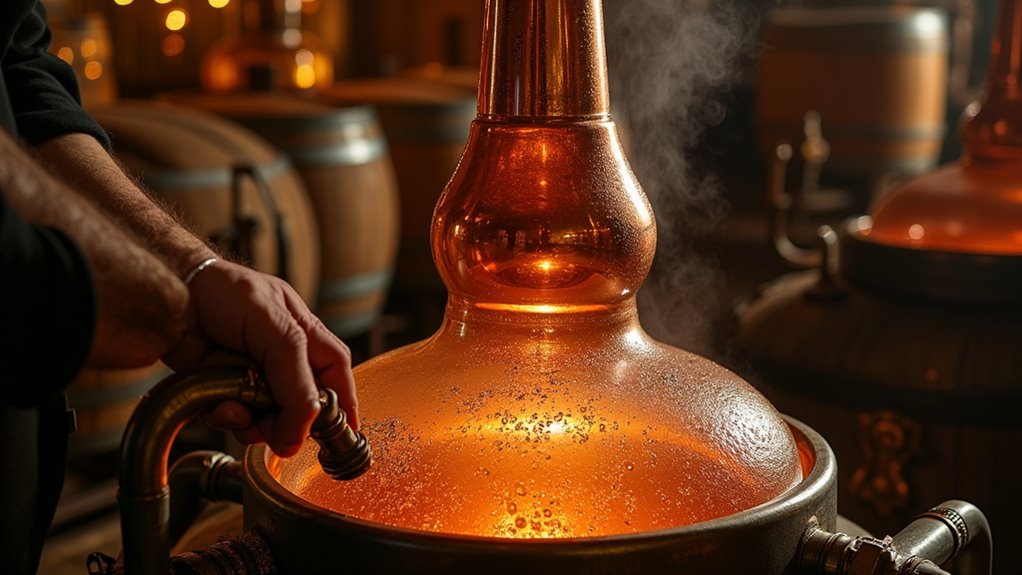
If you want to shape rye whiskey’s flavor and texture, choosing the right distillation method is vital. You’ll typically find rye whiskey distilled in either copper pot stills or column stills, each influencing distinct flavor profiles. Copper pot stills yield a richer, more full-bodied spirit with pronounced grain character, while column stills create a lighter, cleaner whiskey.
Mastery over distillation cuts—heads, hearts, and tails—is fundamental to capturing the ideal flavors and maintaining quality. You’ll want to carefully separate these fractions to preserve the whiskey’s aromatic and flavor intensity.
Additionally, proof regulation plays a significant role; rye whiskey is generally distilled to no more than 160 proof and must be entered into barrels at no higher than 125 proof. This balance ensures the spirit retains its character while meeting legal standards.
Aging in New Charred Oak Barrels
How does aging in new charred oak barrels transform rye whiskey? When you age rye whiskey in these barrels, you’re kickstarting a vital process that shapes its flavor, color, and complexity. The charring caramelizes the wood’s sugars and creates a smoky layer that the whiskey interacts with during aging. This interaction leads to chemical reactions that develop rich vanilla, caramel, and spicy notes.
Here’s how the aging in charred oak barrels impacts your rye whiskey:
Discover how charred oak barrels enrich rye whiskey with flavor, color, and complexity through aging.
- Flavor Development: The whiskey absorbs compounds from the charred layer, enhancing its taste with deep, nuanced flavors.
- Color Transformation: The spirit takes on a warm amber hue from the wood’s natural pigments.
- Chemical Reactions: Temperature and humidity fluctuations inside the barrel cause ongoing reactions that smooth out harsh edges and deepen complexity.
Regional Styles and Historical Variations
Aging in new charred oak barrels shapes the character of rye whiskey, but the spirit’s identity also depends heavily on regional styles and historical methods. Take Pennsylvania-style rye, for example. It was originally made with 100% unmalted rye, giving it a dry, spicy, and full-bodied profile. Over time, the mash bill shifted to include 80-95% unmalted rye with malted barley, softening that bold spiciness.
In contrast, Maryland rye typically features a softer, floral, and rounder flavor, often with lower rye content and some corn in the mash bill. Historically, Monongahela rye was another distinct style, known for being full rye and unmalted, though some distilleries later added malted barley and sour mash techniques.
After Prohibition, these regional styles nearly vanished, but modern distillers are reviving them, carefully reconstructing original mash bills and flavor profiles. Exploring these regional styles helps you appreciate rye whiskey’s rich, diverse heritage.
Differences Between Rye and Bourbon Production
When you compare rye and bourbon, the biggest difference starts with their grain composition. Rye demands at least 51% rye grain, while bourbon needs at least 51% corn. This mash bill difference shapes their unique flavor profiles, with rye offering a spicier, drier taste and bourbon bringing a sweeter, fuller body.
Understanding these contrasts helps you appreciate how each whiskey’s production influences its final character.
Grain Composition Contrast
Although both rye whiskey and bourbon fall under the American whiskey category, their grain compositions set them apart in flavor and character. Rye whiskey’s mash bill must contain at least 51% rye grain, often unmalted or malted rye, which contributes to its distinctive spicy and dry notes.
During fermentation, this grain choice influences the final aroma and taste distinctly from bourbon. Here’s what you should know:
- Rye whiskey typically uses a higher percentage of rye grain (sometimes up to 95%), while bourbon’s mash bill leans heavily on corn (at least 51%).
- Malted rye in rye whiskey adds complexity during fermentation, unlike bourbon’s reliance on malted barley for enzymatic activity.
- The grain makeup directly impacts flavor. Rye brings spice and dryness, bourbon offers sweetness and caramel tones.
Mash Bill Variations
Since the mash bill sets the foundation for any whiskey, understanding its variations is key to appreciating the differences between rye and bourbon. Rye whiskey must have at least 51% rye content in its mash bill, often ranging up to 95%, sometimes even 100% in styles like Monongahela rye.
In contrast, bourbon requires a minimum of 51% corn in its mash bill, with rye making up a smaller portion, usually less than 35%. These grain proportions directly influence how the spirit behaves during distillation, affecting texture and complexity.
The higher rye content in rye whiskey leads to a spicier character, while bourbon’s corn-heavy mash bill imparts sweetness. Knowing these mash bill variations helps you understand why rye and bourbon differ so distinctly right from the start of production.
Flavor Profile Differences
The differences in mash bills between rye and bourbon don’t just affect their production; they shape their flavor profiles in noticeable ways. When you taste rye whiskey, you’ll notice its signature spicy and floral notes, a result of its rye-heavy mash bill and unique distillation process. Bourbon, in contrast, leans sweeter and fuller-bodied, thanks to its corn base and distinct aging in new charred oak barrels.
Here’s how these differences play out:
- Rye whiskey offers a drier, sharper finish with herbal and peppery flavors.
- Its distillation emphasizes phenolic compounds, creating complex spicy and floral aromas.
- Bourbon’s aging imparts rich vanilla, caramel, and oak influences for a smoother, sweeter profile.
Understanding these nuances helps you appreciate each whiskey’s unique character.
Common Mash Bill Variations and Innovations
When you explore rye whiskey, you’ll find that mash bills can vary widely, often containing anywhere from 51% to 95% rye mixed with corn and malted barley. In rye whiskey production, the mash bill is essential, influencing both flavor and texture.
Traditional Pennsylvania-style rye used 100% unmalted rye, but today, malted barley is often added to aid fermentation and deepen flavor complexity. Some distillers take it further, experimenting with grain blends by incorporating wheat, oats, or even rice to craft unique profiles.
High rye mash bills emphasize spice and robustness, while reducing rye content below 51% creates softer, more approachable whiskeys. These innovations reflect a growing interest in diversifying rye whiskey’s character beyond classic recipes.
Notable Rye Whiskey Brands and Producers
When you explore rye whiskey, you’ll notice major producers like MGP play a huge role by supplying many well-known brands such as Old Overholt and Bulleit. You’ll also find craft distilleries like Dads Hat and Leopold’s creating small-batch, regionally inspired whiskeys.
Plus, some brands blend sourced spirits with their own distillates to craft unique flavors you won’t want to miss.
Major Rye Producers
If you’re exploring rye whiskey, you’ll quickly notice a few key producers dominate the scene. MGP in Indiana is a major player, supplying many brands with a high-rye mash bill spirit that forms the backbone of popular ryes. Canadian rye also plays a role, especially with craft distillers like WhistlePig, who source it to create unique farm-based expressions.
Here are three major producers to know:
- MGP: The go-to for many brands needing consistent, high-rye mash bill whiskey.
- WhistlePig: A craft distiller using Canadian rye, known for innovative aging and production.
- George Dickel: Owned by Diageo, recently introduced a 95% rye mash bill, expanding rye’s reach beyond traditional regions.
These producers shape much of today’s rye whiskey landscape.
Popular Rye Brands
What makes a rye whiskey brand stand out in today’s crowded market? It’s all about the mash, distillers’ craftsmanship, and unique flavor profiles.
Popular rye whiskeys like Bulleit Rye and Rittenhouse rely on sourced spirits, often from MGP in Indiana, while Wild Turkey Rye and George Dickel Rye produce their own, with George Dickel using a 95% rye mash.
Some brands, like Templeton Rye and High West, blend from multiple distillers to create distinct tastes.
| Brand | Production Style |
|---|---|
| Bulleit Rye | Sourced (MGP) |
| Wild Turkey Rye | In-house distillation |
| Templeton Rye | Blended sourced spirits |
| WhistlePig | Canadian sourcing & own distillation |
These choices define rye whiskey’s diversity in the market today.
Craft and Boutique Distilleries
Though big-name rye brands dominate the market, craft and boutique distilleries like Dads Hat, Leopold’s, and WhistlePig offer you unique rye whiskeys with distinctive mash bills and aging methods. These craft distilleries focus on small-batch production, often starting with a rye mash bill sourced from suppliers like MGP, then adding their own aging techniques to stand out.
Here’s what makes them special:
- Dads Hat uses an 80% rye mash bill, aging whiskey in small barrels for six months to enhance flavor.
- WhistlePig ages Canadian rye in Vermont, crafting high-proof, premium rye with complex spice and fruit notes.
- Many smaller distilleries experiment with smoking, malting, or unique wood finishes to create truly distinctive rye whiskeys.
You’ll find these approaches bring complexity and character beyond mass-produced options.
Frequently Asked Questions
What Is the Difference Between Rye Whiskey and Regular Whiskey?
The main difference between rye whiskey and regular whiskey is the grain used. Rye whiskey has to be made with at least 51% rye grain, giving it a spicier, drier flavor.
Regular whiskey, like bourbon, usually uses mostly corn, which results in a sweeter, fuller taste. You’ll also notice rye whiskey tends to be sharper and higher proof, making it stand out compared to the more varied profiles of other whiskeys.
Why Does Rye Whiskey Taste Different?
Rye whiskey tastes different because its grain mix is mostly rye, which gives it that spicy, fruity kick you notice. You might think it’s just the aging or distillation, but the high phenolic content from rye really shapes its unique flavor.
Plus, fermentation turns these compounds into complex aromas like clove and baking spices. So, it’s not a myth; rye’s grain and process truly make it distinct.
Is Rye Whiskey 100% Rye?
No, rye whiskey isn’t usually 100% rye. Most rye whiskeys must have at least 51% rye grain, but they often include corn and malted barley too.
While some specialty or craft distillers make 100% rye versions to highlight pure rye flavors, these are pretty rare commercially. So, unless you’re specifically buying a 100% rye whiskey, it’s likely a blend with other grains to balance taste and smoothness.
What’s so Special About Rye Whiskey?
You’ll find rye whiskey’s special because it’s both bold and nuanced, spicy yet fruity. Unlike sweeter bourbons, it offers a dry, peppery kick that wakes up your palate.
Its complex aromas of clove and baking spices add depth, making every sip a layered experience. Whether neat or in a cocktail, rye stands out with sharp, aromatic qualities you won’t get from other whiskies, giving you a uniquely vibrant drink.
Conclusion
Now that you’ve walked through the fiery river of rye whiskey’s creation, you can appreciate the bold spirit that dances from grain to glass. Each sip tells a story of rugged fields, patient craft, and time’s gentle touch.
So next time you raise a glass, know you’re tasting more than whiskey; you’re savoring a liquid legacy, rich with history and character, ready to ignite your senses and warm your soul. Cheers to the journey!