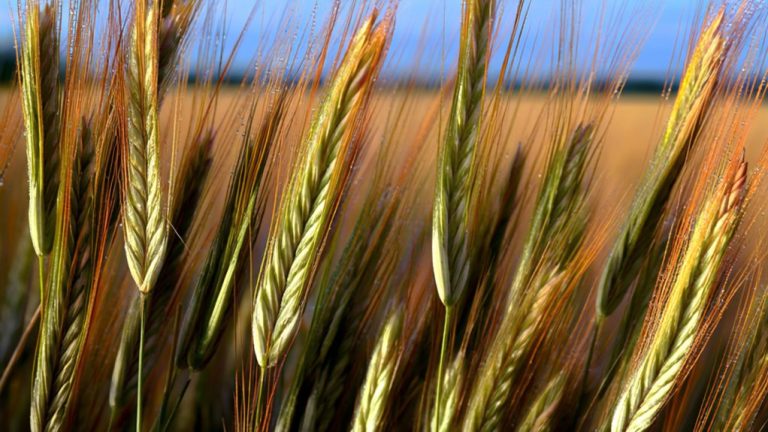
Can Dogs Eat Rye Bread Safely?
You can safely give your dog plain rye bread in small amounts, as it contains beneficial fiber and nutrients that support digestion and overall health.
Just avoid rye bread with harmful additives like garlic, raisins, seeds, or artificial sweeteners, which can be toxic to dogs.
Introduce it gradually and watch for any allergic reactions or digestive issues.
If you want to better understand the best practices, risks, and recommendations, there’s more useful info to explore.
Nutritional Value of Rye Bread for Dogs

Although rye bread isn’t a staple in a dog’s diet, it can offer some nutritional benefits when given in small amounts. Rye bread contains fiber, which supports your dog’s digestive health by promoting regular bowel movements. It also provides essential B vitamins and minerals that contribute to overall well-being.
The carbohydrate content in rye bread is lower than that in white bread, helping to manage your dog’s blood sugar levels more effectively. Some types of rye bread, especially sourdough, may contain probiotics from the fermentation process, though baking often reduces these beneficial bacteria.
When feeding rye bread to dogs, make sure it’s plain and free from added seeds, nuts, or dried fruits like raisins, which can be harmful. Remember, moderation is key since too much rye bread could cause digestive upset due to its carbohydrate content.
Potential Benefits of Rye Bread in a Dog’s Diet
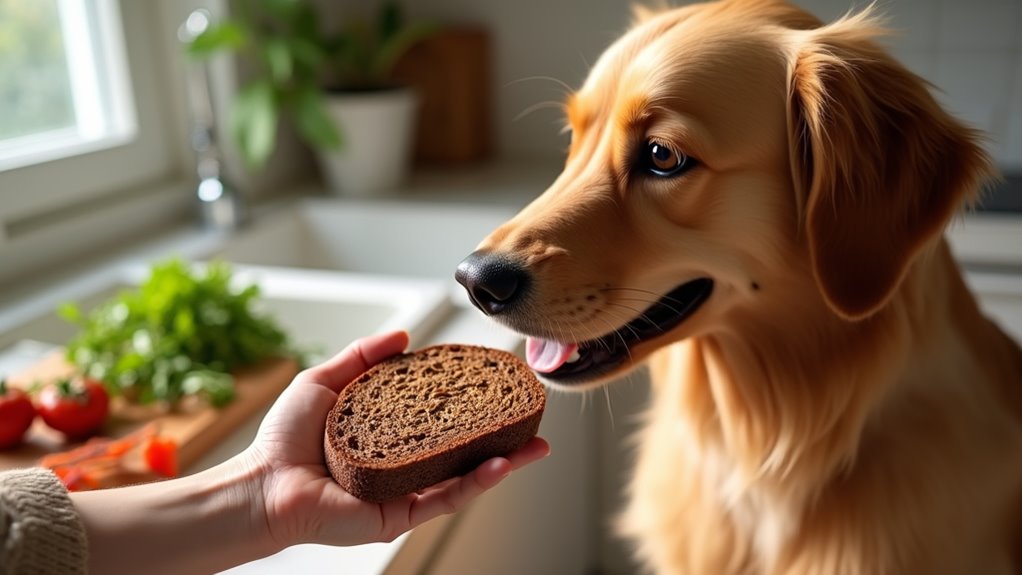
You might be curious about how rye bread fits into your dog’s diet beyond just being a tasty treat. Its higher fiber content can support digestion and gut health, while its lower glycemic index means it’s less likely to cause quick blood sugar spikes.
Let’s take a closer look at these potential benefits and how well your dog can digest rye bread.
Nutritional Content Overview
Since rye bread contains more fiber than white bread, it can help support your dog’s digestion when given in moderation. Rye provides a richer nutritional profile, including essential vitamins and minerals that contribute to your dog’s overall health. Its antioxidants may also enhance immune function, while the lower glycemic index helps maintain stable blood sugar levels, promoting a healthy energy balance.
| Nutrient | Benefit for Dogs |
|---|---|
| Fiber | Aids digestion and gut health |
| Vitamins & Minerals | Supports metabolism and energy |
| Antioxidants | Boosts immune system |
Incorporating plain rye bread occasionally can be a healthy treat, but always watch portion sizes to keep your dog’s diet balanced.
Rye Bread Digestibility
When fed plain and in moderation, rye bread can be a digestible treat for many dogs, thanks to its dietary fiber content. The fiber in whole rye bread supports digestion and may provide minor digestive benefits compared to refined varieties.
However, rye bread’s digestibility varies by dog; some might face gastrointestinal discomfort or allergies, especially if they’re sensitive to gluten or other components. It’s essential to avoid rye bread with added ingredients like seeds or spices, as these can trigger digestive upset or pose health risks.
Always monitor your dog’s response when introducing rye bread, and consult your vet if you notice any signs of allergies or discomfort. Overall, plain rye bread can be a safe option but isn’t suitable for every dog due to individual sensitivities.
Fiber and Gut Health
Rye bread’s fiber content plays a key role in supporting your dog’s digestive health. The dietary fiber in rye bread aids digestion by promoting beneficial gut bacteria, which enhances gut health. This fiber can also help manage mild constipation by encouraging regular bowel movements.
Additionally, rye bread’s fiber supports better nutrient absorption and overall gastrointestinal function. However, you should moderate your dog’s intake, as too much fiber may cause gastrointestinal discomfort or bloating.
| Benefit | Effect on Dogs |
|---|---|
| Dietary Fiber | Supports digestion and gut health |
| Soluble Fiber | Promotes beneficial gut bacteria |
| Moderate Intake | Helps prevent constipation |
Including rye bread moderately in your dog’s diet can improve digestion and gut health effectively.
Ingredients to Avoid in Rye Bread for Dogs
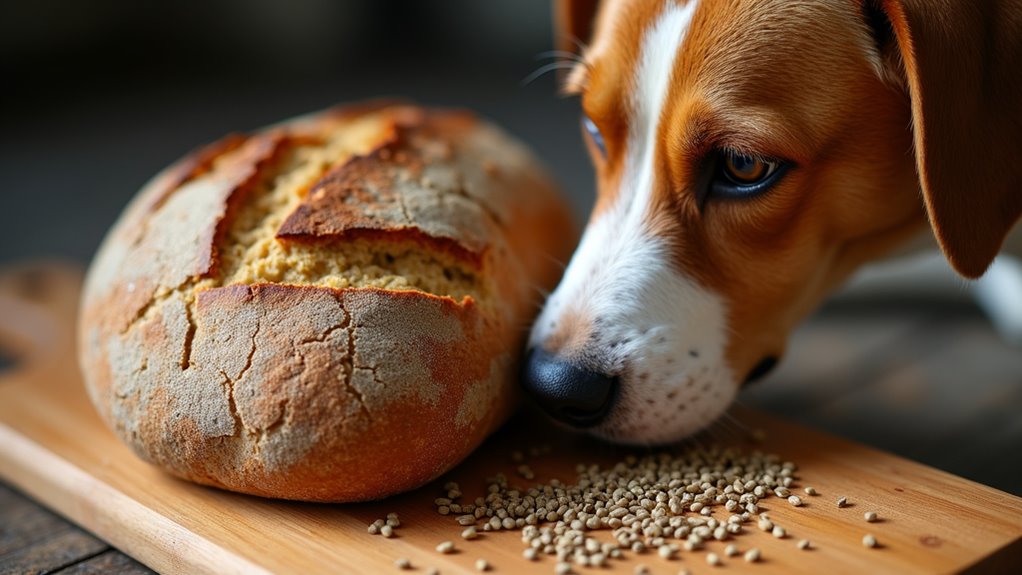
When choosing rye bread for your dog, watch out for toxic additives like onions, garlic, and artificial sweeteners. You’ll also want to avoid breads with harmful seeds, such as caraway, and spices that can irritate their stomach.
Plus, raisins, nuts, and dried fruits are a definite no-go since they pose serious health risks.
Toxic Additives in Rye
Although rye bread might seem like a harmless treat, you need to be cautious about the additives it contains. Many commercially made rye breads include toxic additives like garlic and onion powder, which are highly harmful to dogs and can cause serious health issues such as anemia.
You should also avoid rye bread with raisins, as they’re poisonous to dogs. Additionally, preservatives and artificial flavorings often found in rye bread can upset your dog’s stomach or cause allergic reactions.
One of the most dangerous harmful ingredients to watch for is xylitol, a sweetener that can lead to rapid insulin release and potentially fatal consequences. Always check ingredient labels carefully, and if you spot any of these toxic additives, it’s best to keep rye bread out of your dog’s diet.
Harmful Seeds and Spices
Since some seeds and spices commonly found in rye bread can harm your dog, it’s important to know which ingredients to avoid. Caraway seeds, often present in rye bread, may cause gastrointestinal irritation or allergic reactions.
Spices like cinnamon or certain herbs can be toxic or upset your dog’s digestion. Most importantly, never feed rye bread containing garlic or onion powders, as these additives are highly toxic to dogs.
While seeds like pumpkin or sunflower are generally safe, be cautious with small or hard seeds that could pose a choking hazard. Always check the ingredient list carefully for harmful spices or additives.
Avoiding these problematic seeds and spices helps protect your dog from potential toxicity and allergic responses, ensuring any rye bread treat is as safe as possible.
Avoid Raisins and Nuts
If you want to keep your dog safe, you should avoid rye bread that contains raisins or nuts. Both ingredients are toxic and unsafe for dogs. Raisins can cause serious health issues like kidney failure and gastrointestinal upset, even in tiny amounts.
Nuts such as macadamia, walnuts, and pecans are also harmful, potentially triggering allergic reactions or toxicity. When choosing rye bread for your dog, carefully check the ingredient list to verify it doesn’t include these dangerous additives.
Feeding bread with raisins or nuts can put your dog’s health at risk, so it’s best to avoid any rye bread containing these ingredients altogether. Prioritizing your dog’s safety means steering clear of breads with raisins and nuts to prevent preventable health problems.
Risks Associated With Feeding Rye Bread to Dogs
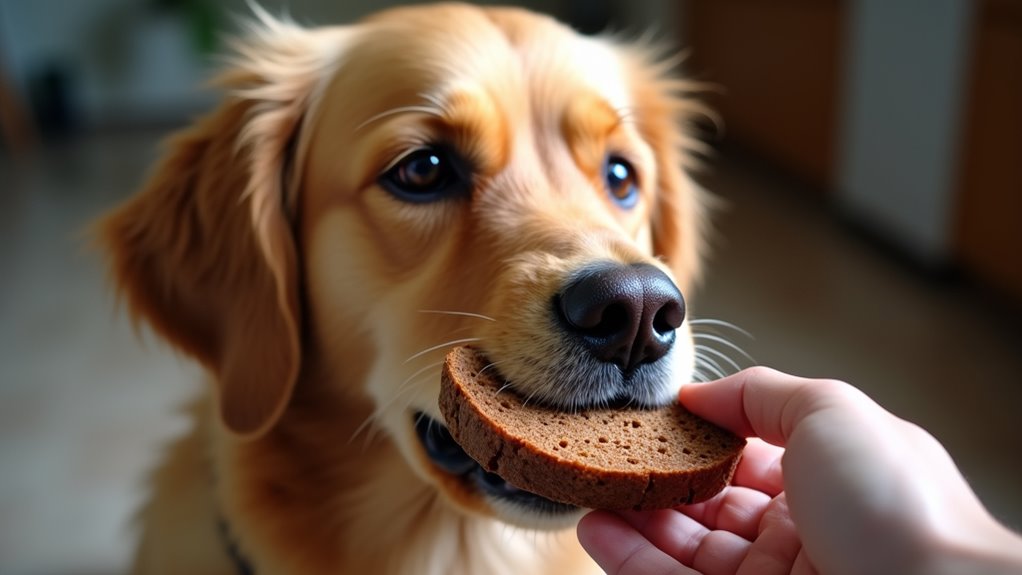
While rye bread can be safe in small amounts, you should be cautious about the risks it poses to your dog. Rye contains gluten, which may trigger allergies or digestive upset in sensitive dogs. Also, rye bread often has a high fiber content that, if fed excessively, can lead to bloating or gastrointestinal discomfort.
Here are some risks to keep in mind:
- Seeds and spices in flavored rye bread can cause choking or toxicity.
- Added sugars and preservatives contribute to obesity and related health issues.
- Gluten can cause allergic reactions or digestive upset in some dogs.
- Overfeeding rye bread may result in bloating or gastrointestinal distress due to its high fiber.
Always offer rye bread in moderation to avoid these complications. Avoid breads with nuts, seeds, or spices to minimize toxicity risks. Paying attention to ingredients and portion size helps keep your dog safe and healthy.
How to Safely Introduce Rye Bread to Your Dog
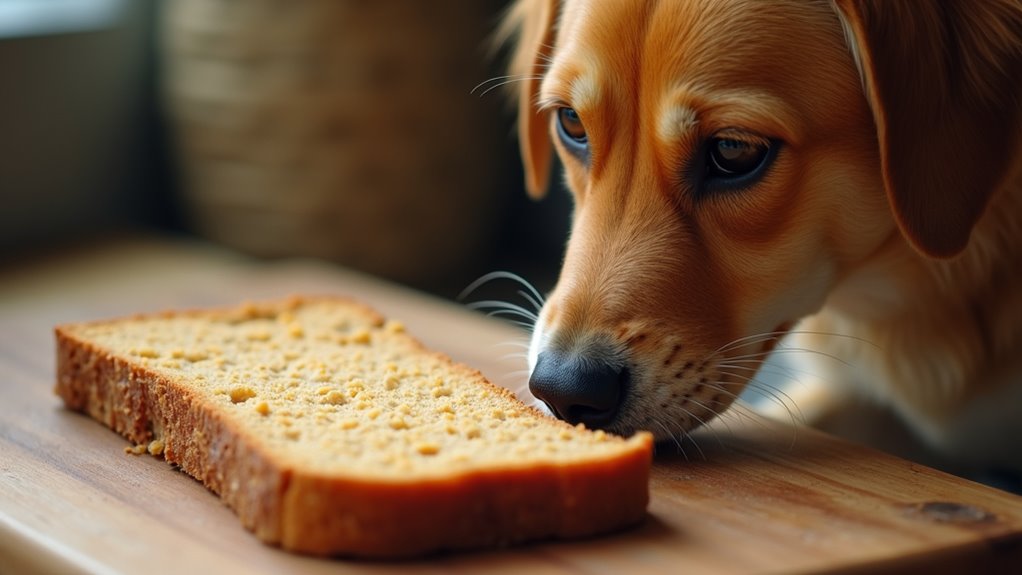
When you introduce rye bread to your dog, start with small amounts to see how they react. Keep an eye out for any signs of allergies or digestive issues during this time.
Also, make sure to avoid harmful additives like butter or sugar that could upset their stomach.
Start With Small Amounts
Since rye bread isn’t a regular part of your dog’s diet, you’ll want to introduce it slowly by offering a small, plain piece first. Feeding your dog small amounts helps minimize the risk of digestive upset and allows you to observe reaction carefully.
When you start with small portions, keep these points in mind:
- Use plain rye bread free from seeds, nuts, or added flavors that could be potentially dangerous.
- Begin with a tiny piece, like a crumb or small slice, to avoid overwhelming your dog’s system.
- Monitor for signs of intolerance or gastrointestinal issues within 24 hours after feeding.
- Consult your veterinarian before making rye bread a regular treat to ensure it’s safe for your dog’s specific needs.
Starting slow and watching closely ensures your dog stays healthy and happy.
Monitor For Allergic Reactions
After offering your dog a small piece of plain rye bread, keep a close eye on them for any signs of allergic reactions or discomfort over the next 24 hours. You should carefully observe for symptoms like itching, swelling, hives, vomiting, diarrhea, or difficulty breathing, as these can indicate an allergy or intolerance.
If your dog has known sensitivities to grains or a history of allergies, it’s best to avoid rye bread altogether. Even if your dog has no previous issues, watch closely for any adverse reaction and be ready to act quickly.
If you notice any signs of an allergy or adverse reaction, consult your veterinarian immediately. Monitoring your dog ensures their safety and helps you detect any potential food intolerance early on.
Avoid Harmful Additives
Although rye bread can be a safe treat, you need to make sure it’s plain and free from harmful additives like seeds, nuts, garlic, or artificial sweeteners before giving it to your dog. Many rye breads contain ingredients that can be toxic or harmful to dogs, so careful selection is key.
Avoid breads with:
- Onion, garlic, or spices, which are toxic to dogs
- Artificial preservatives and sweeteners like xylitol
- Seeds, nuts, or dried fruits that may cause digestive upset
- Any unknown or suspicious additives listed on the label
Always check ingredient lists thoroughly and introduce rye bread gradually to watch for any adverse reactions. If you’re unsure about any additives, consult your vet to keep your dog safe. Avoiding harmful additives ensures rye bread remains a safe occasional treat for your furry friend.
Rye Bread vs. Other Types of Bread for Dogs
When choosing bread for your dog, you’ll find that rye bread stands out due to its higher fiber content compared to white or whole wheat varieties. Rye bread is generally safe for dogs if you serve it plain, avoiding seeds and harmful ingredients like raisins or garlic. However, its denser texture and strong flavor might not appeal to every pup, so feed it in moderation.
Here’s a quick comparison of common bread types for dogs:
| Bread Type | Key Considerations |
|---|---|
| Rye Bread | High fiber, avoid seeds, moderation |
| White Bread | Low fiber, usually safe plain |
| Whole Wheat | Moderate fiber, watch for allergies |
| Seeded Rye | Risk of choking/allergies |
| Bread with Additives | Toxic (raisins, garlic, onions) |
Choosing the right bread means avoiding toxicity risks and allergies by checking ingredients carefully before sharing with your dog.
Signs of Allergic Reactions to Rye Bread in Dogs
If your dog shows signs like itching, redness, or skin irritation after eating rye bread, it could be an allergic reaction. A rye bread allergy might cause a range of allergic reactions, with symptoms showing up minutes to hours after consumption. Watch closely for any unusual behavior or physical changes.
Common symptoms of a rye bread allergy include:
- Skin irritation such as redness, itching, or paw licking
- Digestive issues like vomiting, diarrhea, or excessive gas
- Respiratory signs including sneezing, coughing, or difficulty breathing in severe allergy cases
- Ear infections or inflammation triggered by gluten sensitivities
If you notice any of these symptoms, it’s essential to stop feeding rye bread and consult your vet. Recognizing these allergic reactions early can help prevent more serious health complications for your dog.
Portion Size and Frequency Recommendations
Understanding the signs of allergic reactions helps you decide how much rye bread to offer your dog safely. When it comes to portion size and frequency, stick to small portions, like a few small slices, and feed rye bread only once or twice a week. This keeps your dog’s caloric intake balanced and reduces the risk of weight gain.
It’s important to limit rye bread to no more than 10% of your dog’s daily calories to avoid nutritional imbalances and digestive issues. If your dog has grain sensitivities, avoid rye bread altogether to prevent adverse reactions.
Always follow feeding guidelines carefully and supervise your dog after giving rye bread to catch any signs of discomfort or allergies early. By managing portion size and frequency thoughtfully, you can safely include rye bread as an occasional treat without compromising your dog’s health.
Alternatives to Rye Bread for Dog Treats
Although rye bread can be safe for dogs in moderation, you might want to contemplate alternatives that are less likely to cause digestive upset or allergies. When choosing dog treats, it’s best to avoid seeded bread or any bread with harmful ingredients like spices or sweeteners.
Here are some safer options to consider:
- Plain white bread and whole wheat bread can be given in small amounts and typically have fewer additives.
- Homemade dog treats allow you to control ingredients, ensuring no harmful additives and better nutritional value.
- Specially formulated commercial dog treats offer balanced nutrition designed specifically for dogs.
- Avoid breads with seeds or nuts, as they may cause allergies or digestive issues.
When to Consult a Veterinarian About Bread Consumption
Choosing the right bread or treat for your dog is important, but knowing when to reach out to a veterinarian about bread consumption is just as important. If your dog has known allergies or sensitivities, especially to grains or gluten, you should consult your vet before offering rye bread. Always discuss safe portion sizes and any ingredients in the bread that might pose health risks.
If your dog shows symptoms like itching, swelling, vomiting, or diarrhea after ingestion, seek professional advice promptly. Also, if your dog consumes a large amount of rye bread or seeds, contact your vet immediately to assess potential complications.
Your vet can guide you on whether rye bread fits into your dog’s specific dietary needs and help you prevent adverse reactions. Being proactive and consulting a vet ensures your dog stays safe and healthy when introducing new foods like rye bread.
Frequently Asked Questions
Is Rye Bread Toxic for Dogs?
Rye bread isn’t toxic for dogs, but you should be careful when giving it to them. It contains gluten, which might cause allergies or sensitivities in some dogs. Also, avoid rye bread with added nuts, seeds, or sweeteners, as those can be harmful.
If you choose plain, unseasoned rye bread without any toxic ingredients, it’s usually safe in small amounts. Always check the label before sharing it with your dog.
What Is the Safest Bread for Dogs?
Wondering what the safest bread for your dog is? Plain, fully cooked white or whole wheat bread without any added ingredients is your best bet. You shouldn’t give breads with raisins, garlic, onions, nuts, or artificial sweeteners, since they can be toxic.
Keep treats small and occasional, and never replace their balanced diet with bread. That way, you’ll keep your furry friend happy and healthy!
What Is the One Meat That You Should Never Feed Your Dog?
You should never feed your dog raw or undercooked pork. It can carry parasites like Trichinella spiralis, which cause trichinosis, a serious illness.
Even cooked pork needs to be plain, without seasoning, onions, or garlic, since those can be toxic to dogs. Avoid processed pork products like ham or bacon too, as they’re high in salt and fat, which isn’t good for your dog’s health. Always stick to safe, properly cooked meats.
Can Rye Bread Cause Bloat in Dogs?
Think of your dog’s stomach as a delicate balloon. Rye bread can definitely cause it to overinflate. Yes, rye bread can cause bloat in dogs because its high fiber and dense texture slow digestion, leading to gas buildup.
If your pup has a sensitive tummy or eats too much rye bread at once, that balloon swells uncomfortably. So, it’s best to keep rye bread away or offer it in very small amounts to avoid distress.
Conclusion
You might think a slice of rye bread is just a harmless treat, but feeding it to your dog without caution could turn snack time into a chaotic disaster! While rye bread can offer some benefits, the risks, like allergies or harmful ingredients, are real.
Don’t let one careless bite lead to a vet visit or worse. Always introduce rye bread carefully, watch for reactions, and when in doubt, skip it or consult your vet. Your pup’s safety is priceless!