How to Bake Rye Bread
To bake rye bread, mix 1 cup rye flour with 3 cups bread flour, 2 teaspoons yeast, and salt.
Add 1.75 cups lukewarm water and 2 tablespoons honey for sweetness. Stir into a sticky dough, let it rise 2-3 hours, then shape and rise again.
Bake at 375ºF for 45 minutes. Rye flour makes dense, moist bread, so combining flours helps improve texture.
If you want tips on perfect fermentation and storage, keep exploring these steps.
Understanding Rye Flour and Its Characteristics
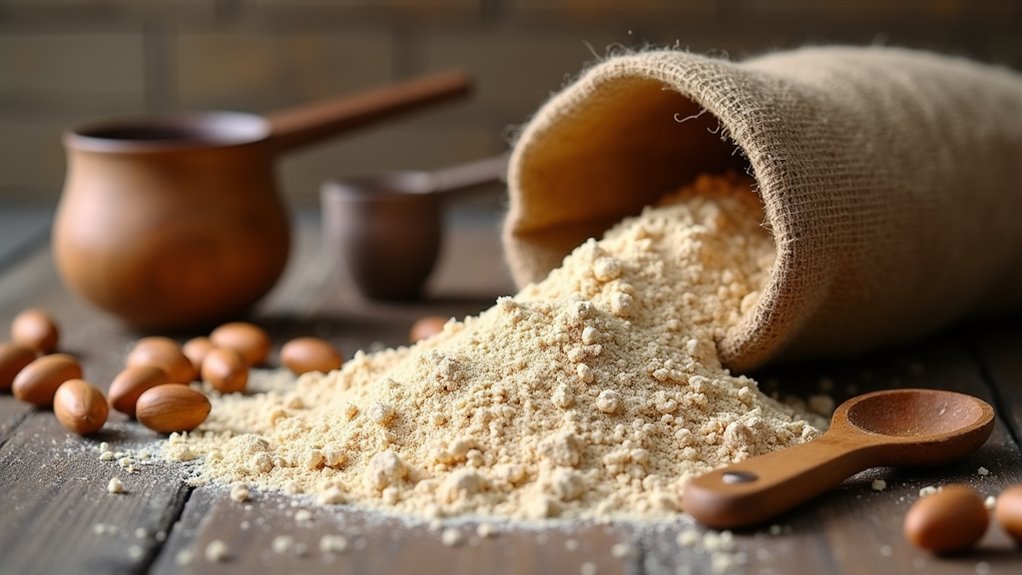
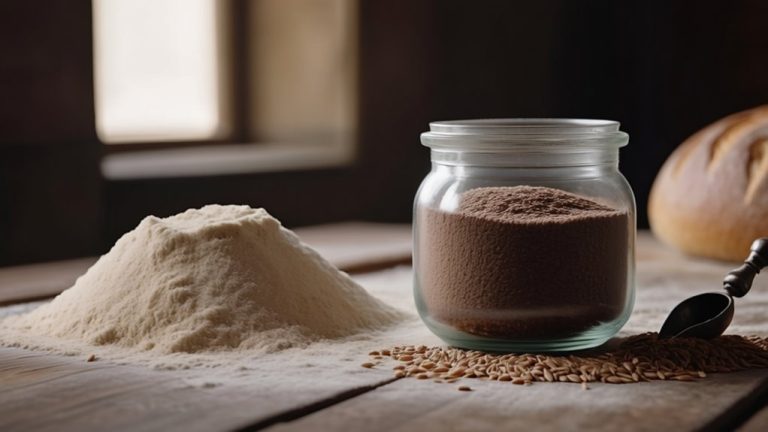
Rye flour stands out for its high bran and mineral content, which makes your bread denser since the bran interferes with gluten formation. Unlike wheat, rye flour‘s bran content cuts through the gluten network, limiting air retention and resulting in dense bread. You’ll notice the dough feels sticky due to rye’s pentosan absorbing more water, so high hydration is essential for workable dough.
If you’re aiming for a lighter loaf, mixing flour types—like combining rye with bread flour—helps improve elasticity and air retention. Different rye varieties offer varied flavor intensities; dark rye brings a robust flavor and denser texture, while medium rye is milder. Understanding these characteristics helps you handle sticky dough effectively and achieve the rye bread texture and flavor you want.
Accurately measuring rye flour by weight rather than volume ensures consistent dough quality and bread texture.
Essential Ingredients for Rye Bread
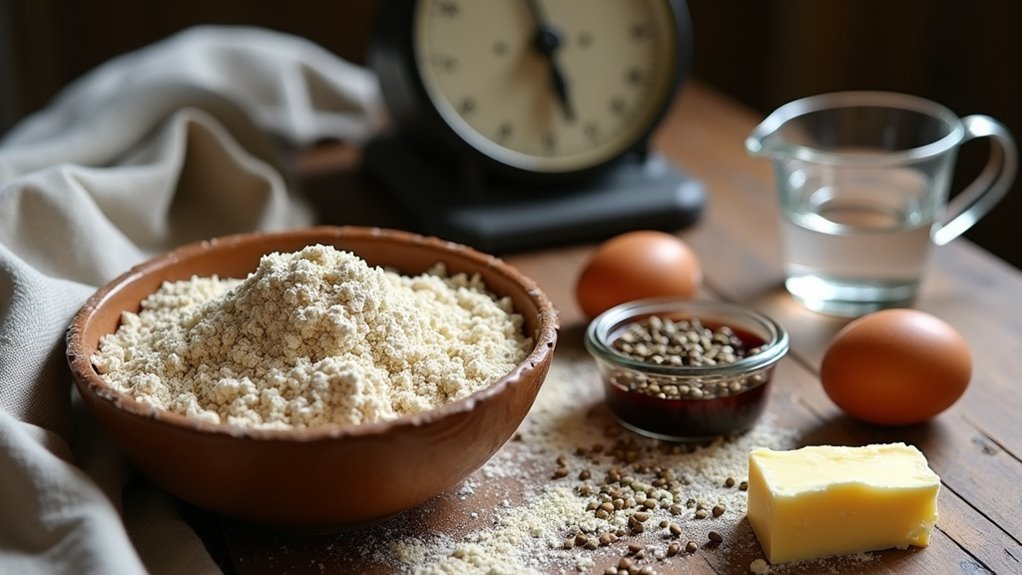
Getting the right mix of ingredients is key to shaping the flavor and texture of your bread. For a classic rye bread, you’ll want to combine rye flour with high-protein bread flour—typically one cup of rye flour to three cups of bread flour—to keep the loaf light yet hearty. You’ll need about 2 teaspoons of instant yeast and 2 teaspoons of kosher salt to activate and season the dough properly.
Lukewarm water, around 1.75 cups, helps to mix and activate the yeast without killing it. Adding 2 tablespoons of honey enhances sweetness, balancing rye’s earthiness. If you like, toss in some caraway seeds for that traditional aromatic touch.
These essential ingredients set the foundation for successful rye bread baking, ensuring a flavorful and well-textured loaf every time. Rye bread’s high content of dietary fiber contributes to its dense yet satisfying texture and offers notable health benefits.
Step-by-Step Rye Bread Preparation
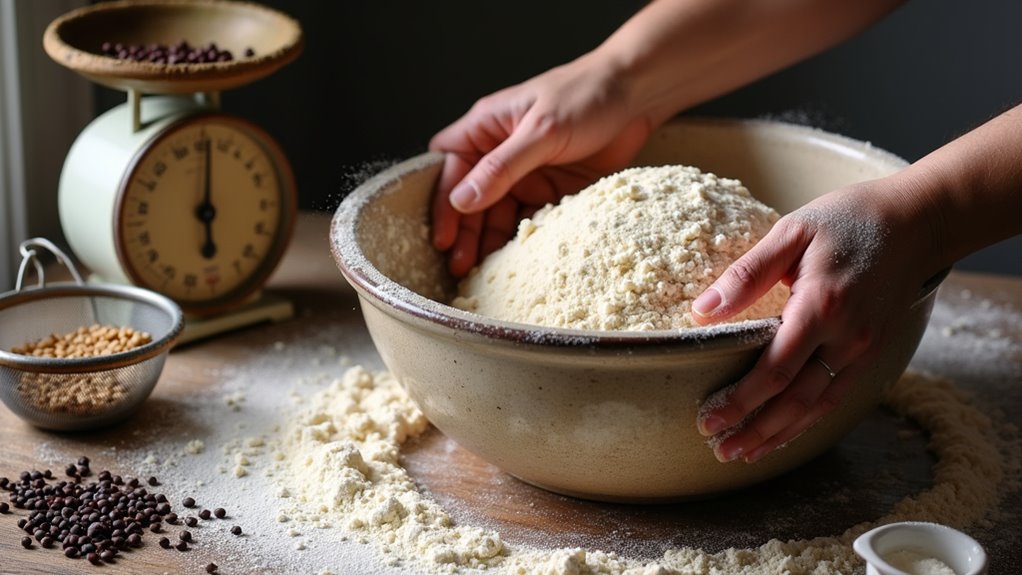
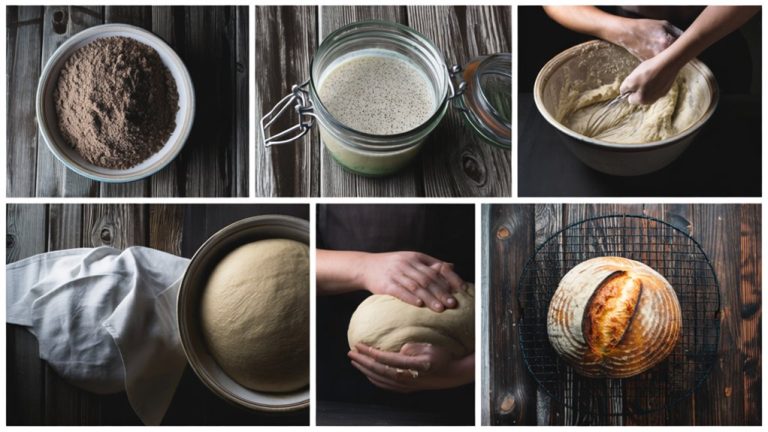
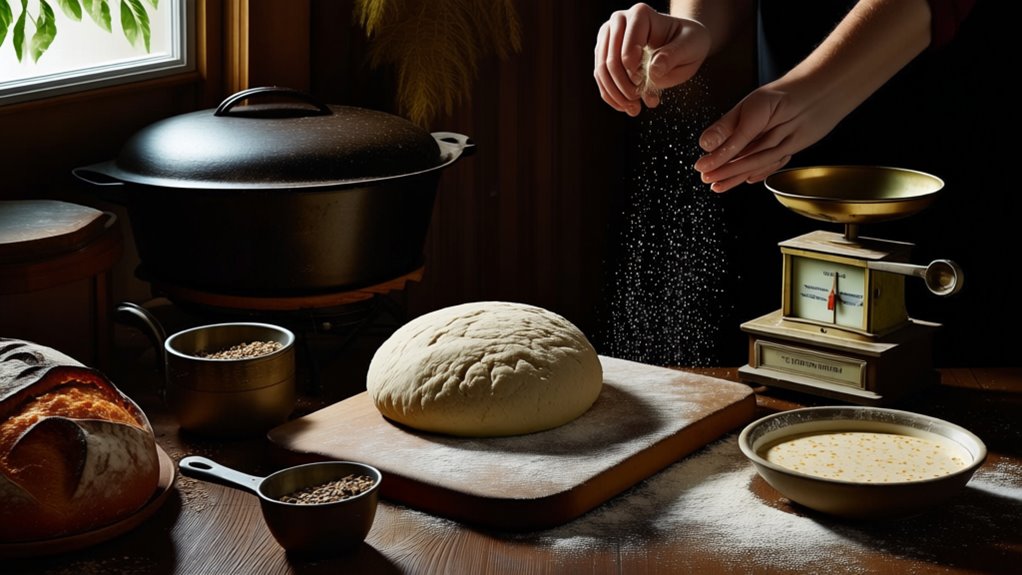
Start by mixing your dry ingredients: 3 cups of bread flour, 1 cup of rye flour, 2 teaspoons of salt, and 2 teaspoons of instant yeast in a large bowl. Next, dissolve 2 tablespoons of honey in 1.75 cups of lukewarm water, then combine this with the dry mix to form a sticky dough. Cover the dough and let it rise for 2 to 3 hours until it doubles in size, ensuring a lighter bread texture.
Shape the risen dough into a loaf and place it in a greased pan. Let it rise again until it domes over the pan rim. Finally, preheat your oven to 375ºF and bake the loaf for 45 minutes.
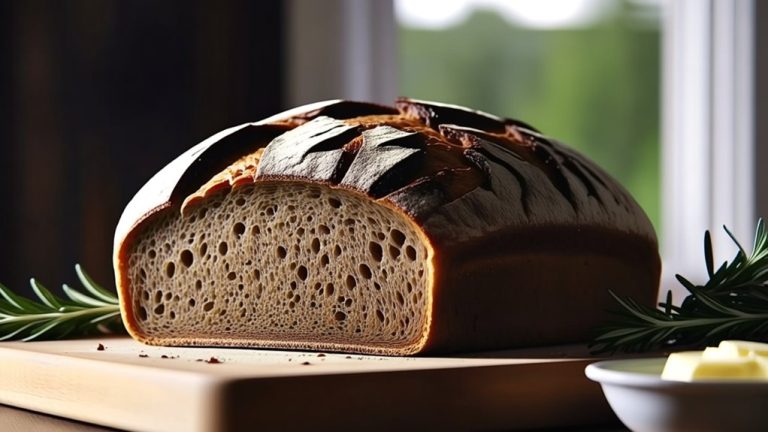
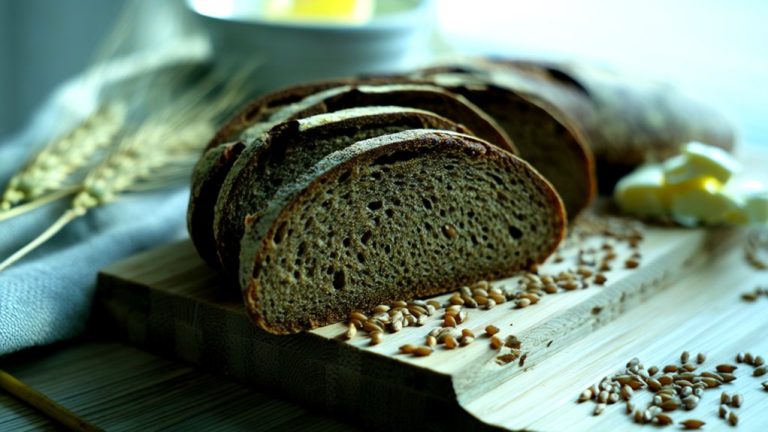
Cool the rye bread on a rack for at least 30 minutes before slicing. The lower gluten content in rye flour contributes to the bread’s characteristic dense texture and unique flavor.
Baking Techniques for Perfect Rye Bread
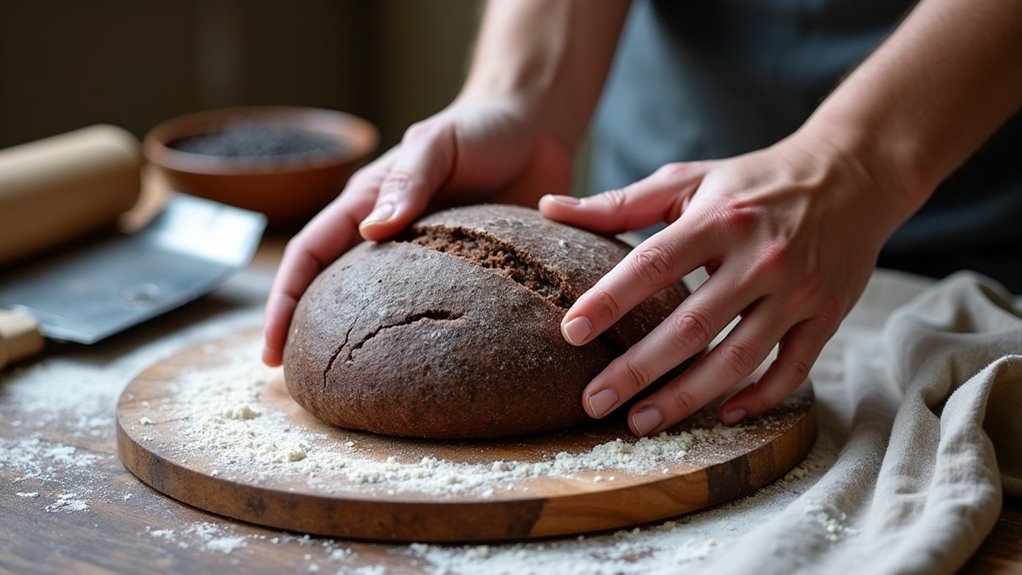
Mastering the baking techniques for perfect rye bread means paying close attention to fermentation, mixing, and baking conditions. Start by fermenting a preferment overnight, using at least 40% whole rye flour to develop flavor and prevent a gummy texture. Combine whole rye flour with bread flour to balance density and lightness in your no-knead rye bread dough.
During bulk fermentation, perform stretch and fold movements to strengthen gluten. Adjust hydrate levels carefully based on your flour and environment to guarantee proper dough consistency. When ready, bake your shaped dough in a preheated Dutch oven at 450°F, keeping the lid on for the first 20 minutes to create steam, essential for a crusty exterior.
Finally, let cool completely on a rack before slicing to maintain the bread’s ideal texture. Rye bread is valued for its lower glycemic index, which supports better blood sugar control compared to other breads.
Tips for Storing and Enjoying Rye Bread
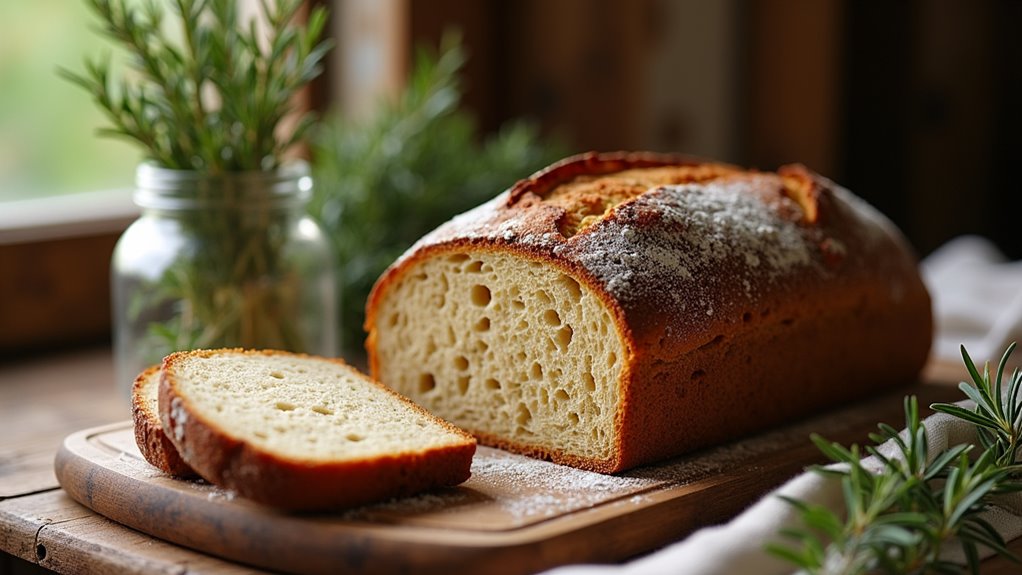
Once your rye bread is perfectly baked and cooled, knowing how to store it properly will help keep it fresh and tasty. You can store rye bread at room temperature in a paper bag for several days, or wrap it in plastic to extend its shelf life by a few more days.
For longer storage, freeze your rye bread by wrapping it tightly in plastic wrap and aluminum foil. When ready to use, thaw it at room temperature and reheat in the oven for better texture.
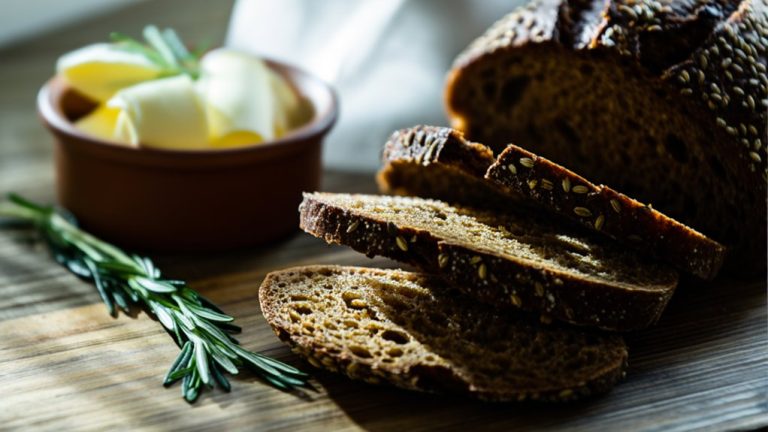
Rye bread is fantastic in a Reuben Sandwich or grilled cheese. If you have leftover rye bread, consider turning it into breadcrumbs. Freeze the breadcrumbs for later use in salads, casseroles, or other recipes, reducing waste and adding flavor to your meals.
Frequently Asked Questions
What Temperature Should Rye Bread Be Cooked At?
You should bake rye bread at about 375°F (190°C) for a standard loaf to get a nice balance between crust and crumb.
If you’re using a Dutch oven, preheat it to 475°F (246°C) first, then bake covered for 30 minutes to trap moisture, uncover, and continue until the crust’s golden brown.
Make certain the internal temperature hits around 190°F (88°C) to guarantee it’s fully baked and delicious.
What Are Common Rye Bread Baking Problems?
Oh, you’ll love how rye bread loves to surprise you with dense, gummy, or collapsed loaves! Common problems include dense texture from rye flour’s tricky gluten, gummy interiors if you rush fermentation, and collapsing if you overproof.
Baking too low or too long can produce crusts that are either pale or rock-hard. You’ll want to keep an eye on timing, temperature, and moisture to keep your rye loaf behaving nicely.
Is Rye Bread the Healthiest Bread?
Yes, rye bread is often considered one of the healthiest breads you can choose. It’s packed with fiber, which helps keep you full and supports digestion. You’ll also get essential nutrients like magnesium and B vitamins.
Plus, its low glycemic index means it won’t spike your blood sugar like white bread. If you’re aiming to improve heart health and reduce inflammation, rye bread’s antioxidants and cholesterol benefits make it a smart pick.
What Is the Cooking Time for Rye?
Baking rye bread takes about 45 to 50 minutes, like waiting for a golden sunset to settle. If you’re using a Dutch oven, bake it covered for 30 minutes, then uncovered for another 15 to 20 minutes to get a nice crust. Keep in mind, wetter dough might need a bit longer.
Using a thermometer, you want the internal temperature to hit around 190°F (88°C) to know it’s done.
Conclusion
Now that you’ve mastered the art of baking rye bread, you’re ready to enjoy a timeless loaf that would’ve impressed even Shakespeare himself.
Remember, understanding your rye flour and following the steps carefully will reward you with a hearty, flavorful bread.
With the right baking techniques and proper storage, your rye bread will stay fresh and delicious.
So, don’t hesitate—grab your apron and start baking a rustic masterpiece today!