Why Is Rye Bread Not Gluten-Free?
You might think rye bread is gluten-free since it has less gluten than wheat, but it isn’t. Rye contains its own type of gluten proteins that can cause problems if you have gluten sensitivity or celiac disease.
Even sourdough rye, which breaks down some gluten, still isn’t safe.
Plus, many rye breads mix in wheat flour, upping gluten levels. If you want to know why rye’s gluten matters and what alternatives exist, keep exploring this topic.
Understanding Gluten and Its Presence in Rye
Although rye contains less gluten than wheat, it still has gluten proteins that can affect those with gluten sensitivities. The type of gluten found in rye, known as rye gluten, differs from wheat gluten but is still present in significant amounts.
In fact, the gluten content in rye is about one-third that of wheat, making it far from gluten-free. If you have celiac disease, consuming rye can trigger harmful reactions, just like wheat. Even sourdough rye bread, which undergoes fermentation that may reduce gluten levels, still contains enough gluten to be unsafe.
Additionally, many commercial rye breads mix in wheat flour, increasing the overall gluten content. Pure rye grains naturally contain gluten, so traditional rye recipes won’t eliminate it either. If you’re managing celiac disease or gluten sensitivity, it’s important to recognize that rye gluten can still pose risks, and rye bread should be avoided despite its lower gluten content compared to wheat.
Differences Between Rye Gluten and Wheat Gluten
Because rye gluten has a different chemical structure and is present in lower amounts than wheat gluten, it behaves quite differently in baking and digestion. When you compare rye gluten to wheat gluten, you’ll notice that wheat gluten contains proteins like gliadin and glutenin, which are largely absent or less common in rye.
This difference means rye gluten is less elastic and doesn’t trap air as effectively, so rye bread tends to be denser and less risen than wheat bread.
Even though rye contains about one-third the gluten found in wheat, it still poses a risk for those with gluten sensitivity. The unique composition of rye gluten affects how it breaks down during digestion and can still trigger symptoms in sensitive individuals.
The Role of Gluten in Rye Bread Production
When you bake rye bread, gluten plays a vital but different role than it does in wheat bread. Rye contains less gluten, about one-third of wheat’s amount, and its gluten has a unique chemical structure. This affects how rye dough behaves and how the bread turns out. Here’s what you should know about gluten’s role in rye bread production:
Gluten in rye bread is less abundant and structurally different, shaping its unique dough behavior and final texture.
- Rye’s gluten provides some elasticity but forms weaker dough compared to wheat gluten.
- Commercial rye bread often mixes rye with wheat flour, boosting gluten content and improving texture.
- Sourdough fermentation helps break down some rye gluten proteins, enhancing digestibility but not removing gluten completely.
- Because of rye’s gluten, even with fermentation, rye bread isn’t safe for those with celiac disease or severe gluten intolerance.
Understanding these points helps you appreciate why gluten, though less abundant and different in rye, remains essential to rye bread’s structure and baking process.
Health Considerations for Gluten Sensitivity and Celiac Disease
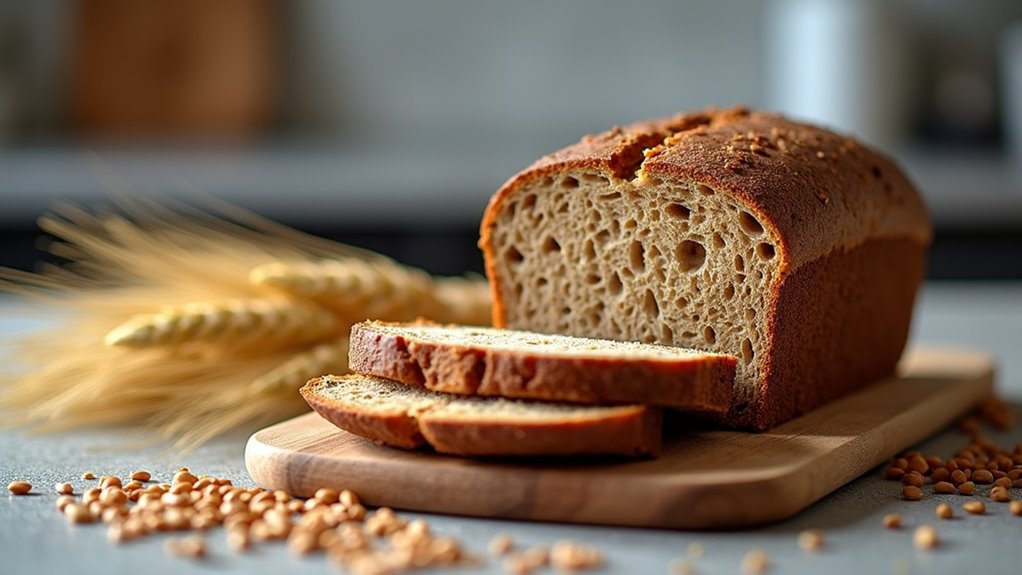
Gluten’s presence in rye bread means it’s not a safe choice if you have celiac disease or gluten sensitivity. Even though rye contains less gluten than wheat, the gluten proteins it has can still trigger adverse reactions. If you have celiac disease, consuming rye bread can damage your small intestine and cause serious health issues.
For those with gluten sensitivity, symptoms like bloating, fatigue, and stomach pain might occur after eating rye products. While sourdough rye bread might slightly reduce gluten levels, it doesn’t eliminate gluten entirely, so it’s still risky. You should avoid rye unless it’s specifically labeled gluten-free, which is rare due to potential cross-contact during processing.
This cross-contact can introduce additional gluten, increasing health risks for people with celiac disease or gluten sensitivity. To protect your health, it’s important to steer clear of rye bread and opt for truly gluten-free options.
Exploring Alternatives and Low-Gluten Bread Options
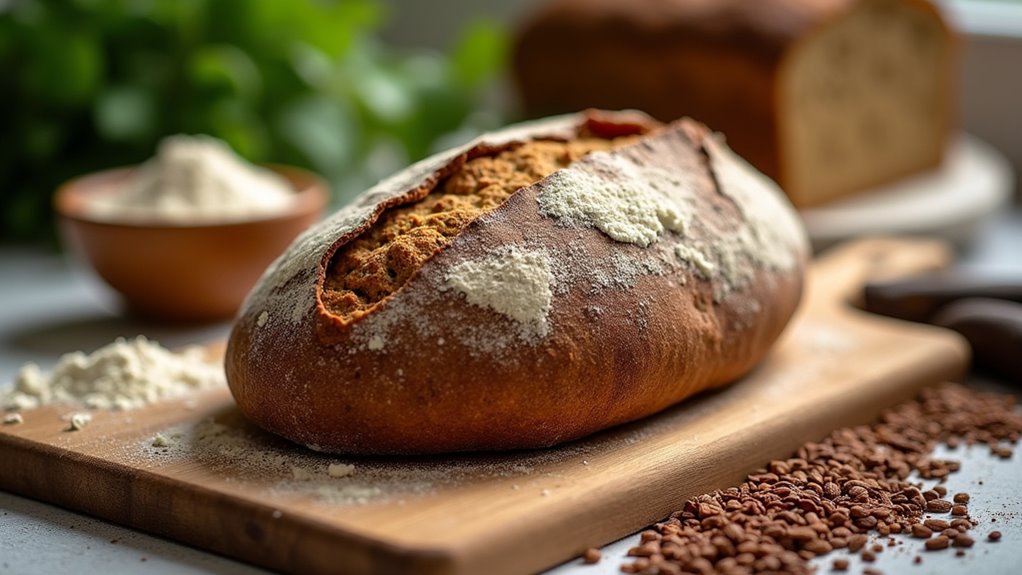
Although rye bread isn’t safe for those with celiac disease, you might find some low-gluten or alternative breads that fit your needs better. Rye contains less gluten than wheat, but still enough to cause issues, so traditional rye breads are off-limits if you need gluten-free options.
Rye bread isn’t safe for celiac disease—try low-gluten or gluten-free alternatives instead.
Here are some alternatives to contemplate:
- Certified gluten-free breads made from rice, corn, or other gluten-free flours offer safe substitutes without rye.
- Pure rye bread, made solely from rye flour and sourdough, is rare and still contains gluten, so it’s not suitable for celiac disease.
- Low-gluten sourdough breads made with wheat may be tolerable for mild sensitivities but aren’t gluten-free.
- Experiment with gluten-free blends that mimic rye’s flavor using seeds and spices for a similar taste without the gluten.
Frequently Asked Questions
Is Rye Bread Ok for Gluten-Free?
No, rye bread isn’t okay if you need to follow a gluten-free diet. Even though rye has less gluten than wheat, it still contains enough to trigger problems for you if you have celiac disease or gluten sensitivity.
Most rye breads also include wheat flour or other gluten-containing ingredients, so they’re definitely not safe. You should look for bread labeled specifically gluten-free to stay safe and avoid any adverse reactions.
Why Can’t Celiacs Eat Eggs?
Eggs aren’t off-limits for you just because of celiac disease; think of them like a separate puzzle piece. You can’t eat eggs only if you’re allergic to them.
Since eggs don’t contain gluten, they don’t trigger celiac reactions. However, if you have both celiac and an egg allergy, you need to avoid eggs too.
What Type of Bread Has the Lowest Gluten?
If you’re looking for bread with the lowest gluten, sourdough is your best bet because fermentation breaks down much of its gluten. Pure rye bread has less gluten than wheat bread, but most rye bread still contains some wheat flour, so it’s not gluten-free.
For truly minimal gluten, you’d want gluten-free breads made from rice, tapioca, or other gluten-free grains, which contain less than 20 ppm gluten.
Is Rye as Inflammatory as Wheat?
Rye isn’t as inflammatory as wheat for many people because it contains less gluten and has a different protein structure. You might find rye easier to tolerate if you’re sensitive to wheat.
However, if you have celiac disease or a serious gluten intolerance, rye can still cause inflammation since it does contain gluten. So, while rye might be gentler, it’s not completely safe for everyone with gluten issues.
Conclusion
Now that you know rye contains gluten, you can understand why rye bread isn’t safe if you have celiac disease or gluten sensitivity. For example, imagine Sarah, who switched to rye bread thinking it was gluten-free. She quickly experienced symptoms again.
So, it’s vital to choose truly gluten-free alternatives like rice or almond flour breads. Being informed helps you avoid discomfort and stay healthy while still enjoying delicious bread options.