What Kind of Flour Is Used for Rye Bread
For rye bread, you typically use specific rye flours like white, medium, dark, or pumpernickel, each affecting flavor and texture differently.
Rye flour has less gluten and more bran than wheat, making your dough denser and stickier. You might blend rye with wheat flour to lighten the loaf and improve rise.
Measuring by weight guarantees accuracy since rye’s density varies.
If you want bread that’s just right, knowing how to handle and measure rye flour is key—and there’s more to uncover about that process.
Types of Rye Flour
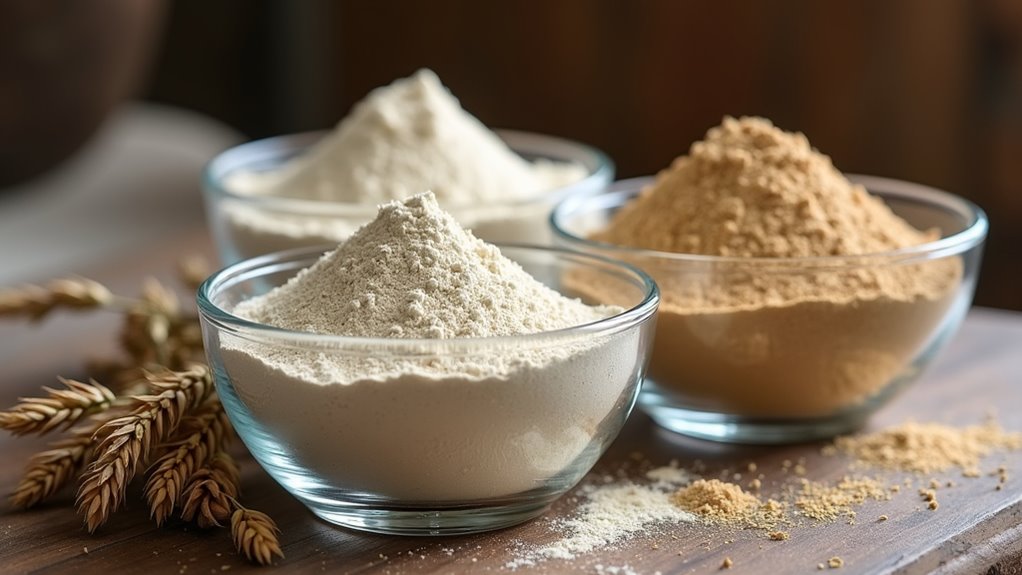
Although rye flour comes in several varieties, understanding their differences can help you choose the right one for your bread. White rye flour, made from just the endosperm, offers a subtle rye flavor and a light crumb, perfect if you want a milder taste.
Medium rye flour includes more bran, delivering a heartier rye flavor while maintaining a lighter texture, making it quite versatile. Dark rye flour uses the whole rye kernel, giving your bread a denser texture and a stronger flavor profile.
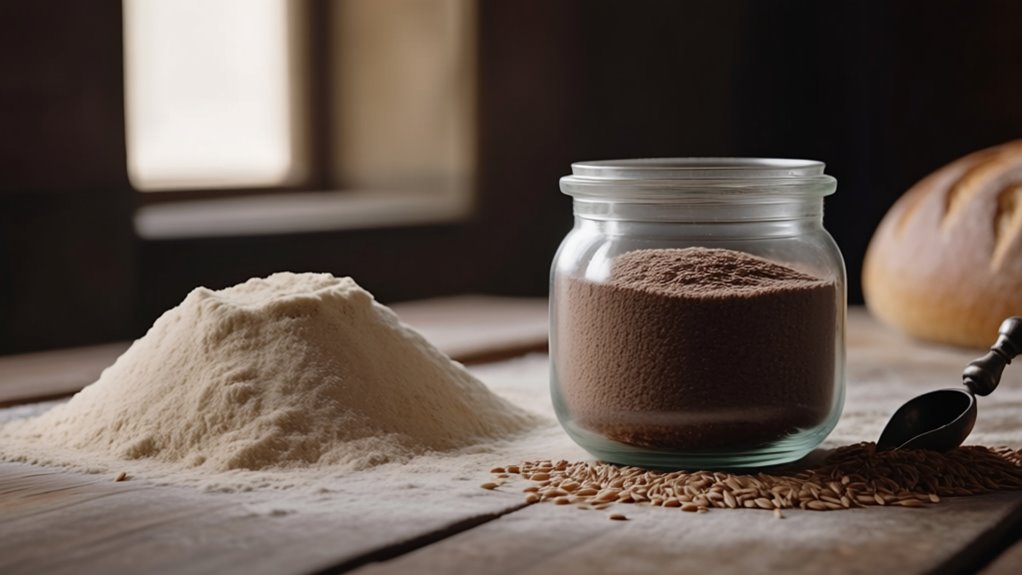
For a truly robust experience, pumpernickel flour, a coarse whole grain rye flour, stands out with its assertive rye flavor and moist, dense crumb. Knowing these options lets you tailor your rye bread’s taste and texture exactly how you like it. Accurate flour measurement is crucial for consistent results when baking with different rye flours.
Differences Between Rye and Wheat Flours
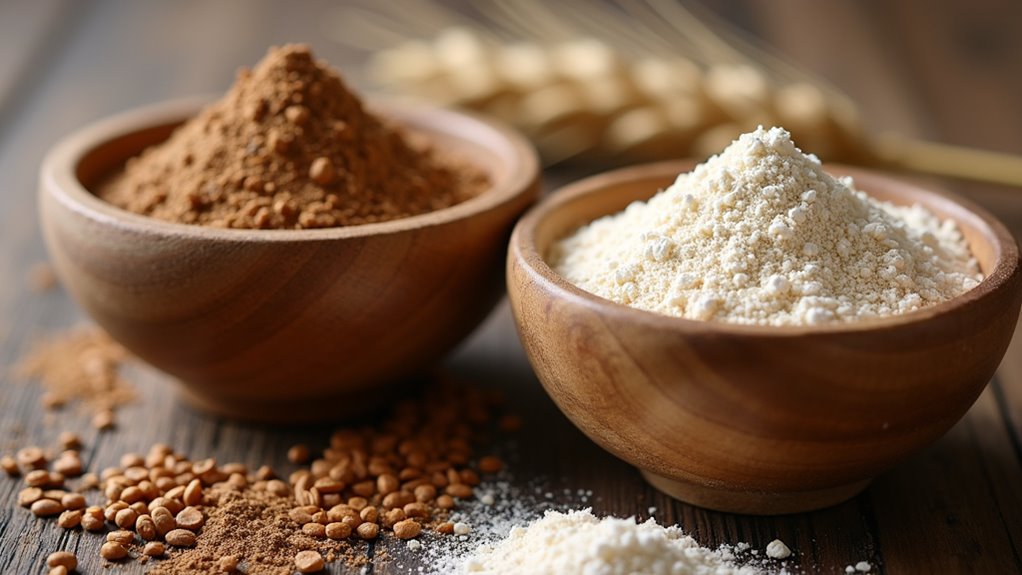
When you compare rye and wheat flours, you’ll notice rye has less gluten and more bran and minerals, which affects dough texture and density. Rye’s unique proteins and high water absorption make its dough less elastic and moister than wheat dough. This composition also contributes to rye bread‘s high dietary fiber content, which supports digestion and blood sugar control.
Gluten Composition Contrast
Since rye flour contains gliadin and glutelin proteins that form a weaker gluten network than wheat flour, you’ll notice rye bread is denser and less airy. Rye’s high pentosan content absorbs water and limits gluten formation, making the dough stickier and harder to rise. Unlike wheat flour, which relies on strong gluten to trap air bubbles, rye bread’s texture depends on gelatinized starches and pentosans.
When baking with rye, you get a dense and heavy crumb rather than a light, fluffy one. Understanding these gluten composition contrasts helps you manage expectations and techniques for rye bread’s unique texture.
| Aspect | Rye Flour |
|---|---|
| Gluten Formation | Weaker, gliadin & glutelin |
| Dough Texture | Sticky, less elastic |
| Bread Texture | Dense and heavy |
| Baking Challenge | Avoiding gummy results |
Bran and Mineral Content
Two key factors set rye flour apart from wheat flour: its higher bran and mineral content. The bran in rye flour interferes with gluten development, which means the dough won’t rise as much as wheat-based doughs. Because of this, you’ll often get a denser bread with rye flour.
Additionally, the elevated mineral content contributes to rye’s distinctive earthy flavor, adding depth to your baked goods. Unlike wheat flour’s strong gluten network, rye’s bran and minerals make the dough stickier and less elastic, requiring different handling techniques.
Water Absorption Effects
Although rye and wheat flours might look similar, their water absorption properties are quite different, which affects how you handle the dough. Rye flour contains more pentosans, enabling it to absorb over twice the water compared to wheat flour. This impacts dough consistency, making rye dough stickier and denser.
You need to carefully adjust hydration to avoid a gummy texture. Additionally, rye’s higher water absorption speeds up the fermentation process, leading to quicker proofing and moisture retention in rye breads, keeping them fresher longer.
| Property | Rye Flour |
|---|---|
| Water Absorption | High (due to pentosans) |
| Dough Consistency | Sticky, dense |
| Fermentation Process | Faster proofing |
| Final Bread Texture | Moist, longer-lasting |
Impact of Rye Flour on Bread Texture and Flavor
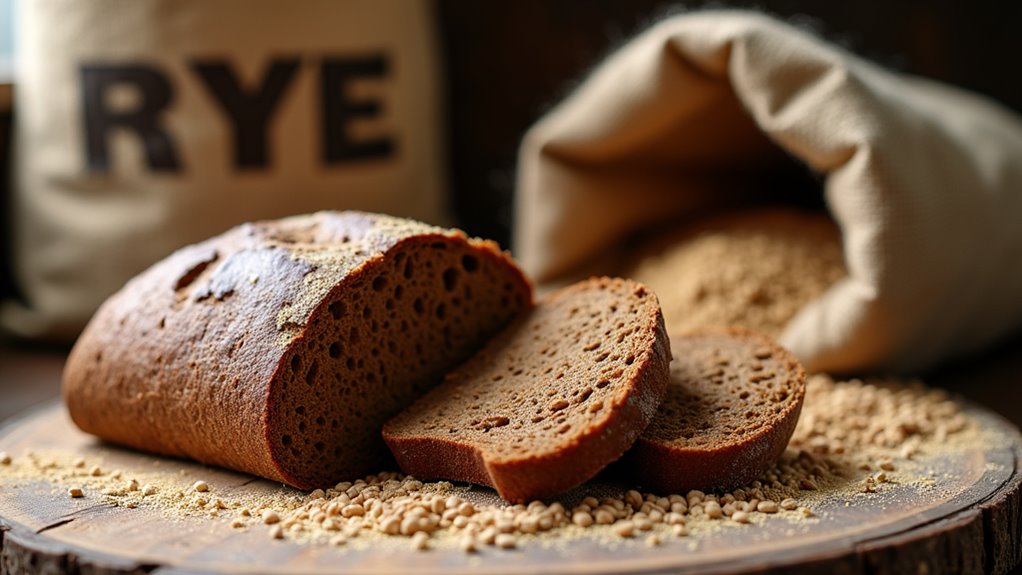
When you use rye flour, you’ll notice its higher bran and mineral content gives bread a denser texture and earthy flavor. The weaker gluten and water-absorbing pentosans create a moist, sticky dough that affects the crumb’s heaviness.
Plus, the type of rye flour you choose—light, medium, or dark—can really change how intense the flavor and texture turn out.
Rye flour’s lower gluten content compared to wheat flour is a key factor in producing the characteristic dense texture of rye bread.
Rye Flour Characteristics
Rye flour plays a key role in shaping the texture and flavor of your bread, offering a denser crumb and a unique taste compared to wheat flour. Rye flour contains pentosans that absorb water, making the dough sticky and helping retain moisture, which keeps your bread fresh longer. Whole-grain rye provides a robust, earthy, and slightly tangy flavor, distinct from the milder white rye.
It’s also coarser than white rye, contributing to a heartier texture in your loaf. Because rye flour has less gluten, it traps less air during fermentation, resulting in a denser bread crumb. When you use whole-grain rye, the bran and mineral content intensify the taste but can reduce volume, creating a heavier loaf.
These characteristics define rye bread’s unique sensory experience.
Bran and Gluten Effects
The higher bran and mineral content in rye flour directly affects how your bread turns out, making it denser and less airy than wheat-based loaves. Rye flour’s bran interferes with gluten development because its proteins—gliadin and glutelin—form a weaker gluten network. This means your dough rise won’t be as pronounced, resulting in a firmer, chewier texture.
Additionally, rye’s pentosans absorb a lot of water, creating a sticky dough that further limits gluten’s ability to trap air. These factors combine to produce bread with a distinct earthy flavor and a denser crumb. So, when you bake with rye flour, expect a loaf that’s hearty and robust, reflecting its unique bran and gluten characteristics rather than the light, open texture typical of wheat breads.
Flavor and Texture Profiles
Although you might expect a bread’s texture and flavor to be similar across flours, using rye flour brings distinct characteristics that set it apart. Rye flour imparts an earthy flavor that ranges from mild to robust, especially in darker varieties. Its higher bran content makes the bread denser since bran interferes with gluten formation, trapping less air than wheat flour.
Rye’s unique proteins alter gluten’s structure, producing a softer, less elastic crumb. Additionally, pentosans in rye flour absorb water, resulting in a viscous dough that keeps the bread moist and chewy. When you mix rye flour with wheat flour, you get a lighter loaf with a subtle tang, balancing rye’s dense texture and rich flavor for a well-rounded bread experience.
Blending Rye Flour With Other Flours
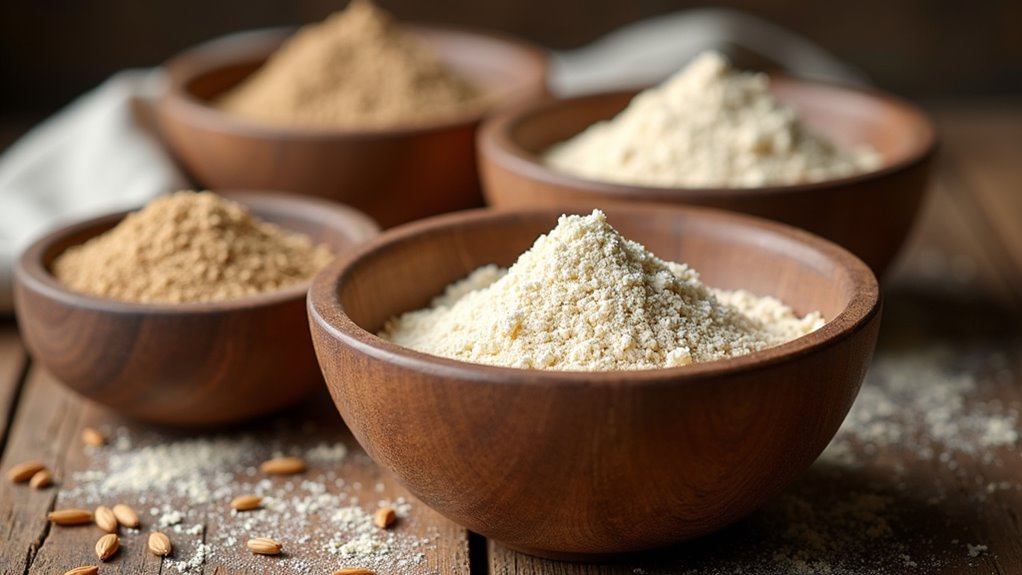
When you blend rye flour with bread or all-purpose flour, you’ll get a lighter loaf that still carries a subtle rye flavor—perfect if you’re just starting to bake with rye. Blending medium or light types of rye with wheat flour helps create a balanced loaf of rye bread that’s not too dense. Using bread flour in the mix improves gluten structure, giving your bread better rise and softness.
You can adjust ratios depending on how strong you want the rye flavor.
- Mix 70% wheat flour with 30% rye flour for a mild rye taste
- Experiment with different types of rye to vary flavor and texture
- Blending reduces rye’s density, making bread ideal for sandwiches and toast
This blend also helps retain the soluble fiber content of rye, which supports digestion and blood sugar regulation.
Measuring Rye Flour for Baking
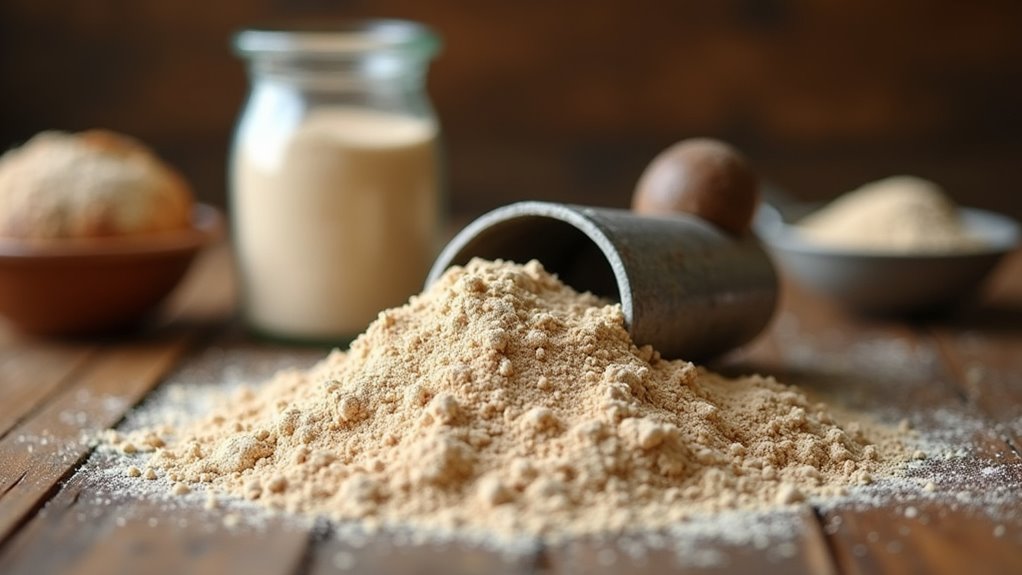
Accurately measuring rye flour is essential for successful baking, as its density can vary widely between types and brands. To guarantee precision, always use weight measurements rather than volume. For example, 1 cup of rye flour typically weighs about 96 grams, but moisture content ranging from 11% to 14% affects this.
Using a kitchen scale helps maintain consistency, especially when recipes specify gram amounts. Below is a quick reference for measuring different types of rye flour:
| Rye Flour Type | Approx. Weight per Cup (g) | Typical Moisture Content (%) |
|---|---|---|
| White Rye | 90 | 11-12 |
| Medium Rye | 96 | 12-13 |
| Dark Rye | 100 | 13-14 |
| Whole Rye | 105 | 13-14 |
| Rye Bran | 110 | 12-13 |
Precision in measuring rye flour guarantees better baking outcomes every time.
Handling and Baking Techniques for Rye Dough
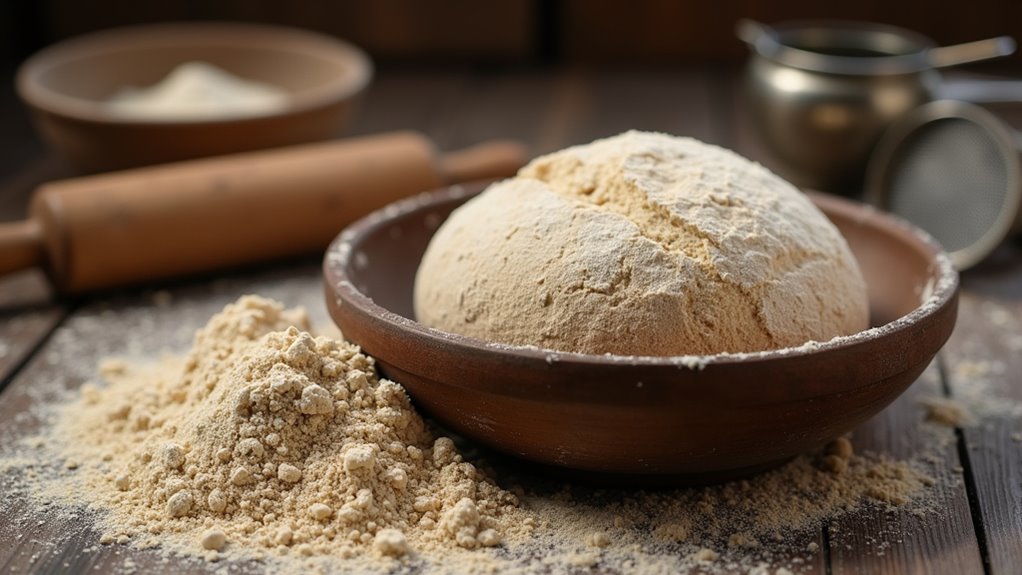
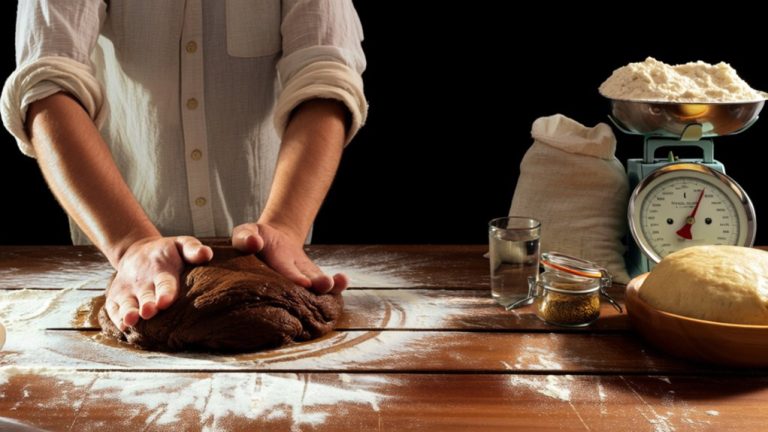
Since rye dough tends to be sticky and less elastic than wheat dough, you’ll need to handle it gently to maintain its structure. Because rye flour has lower gluten content, over-kneading can damage the dough’s texture. Proper hydration management is essential since the high pentosan content makes rye dough viscous, aiding gas retention during rise.
To bake rye bread successfully, focus on these handling techniques:
- Use gentle, brief kneading to avoid overworking the dough.
- Dust your work surface with rye flour to prevent sticking when shaping.
- Allow the dough to rise until it doubles, enhancing flavor and texture.
Adjusting Rye Flour Usage for Desired Bread Results
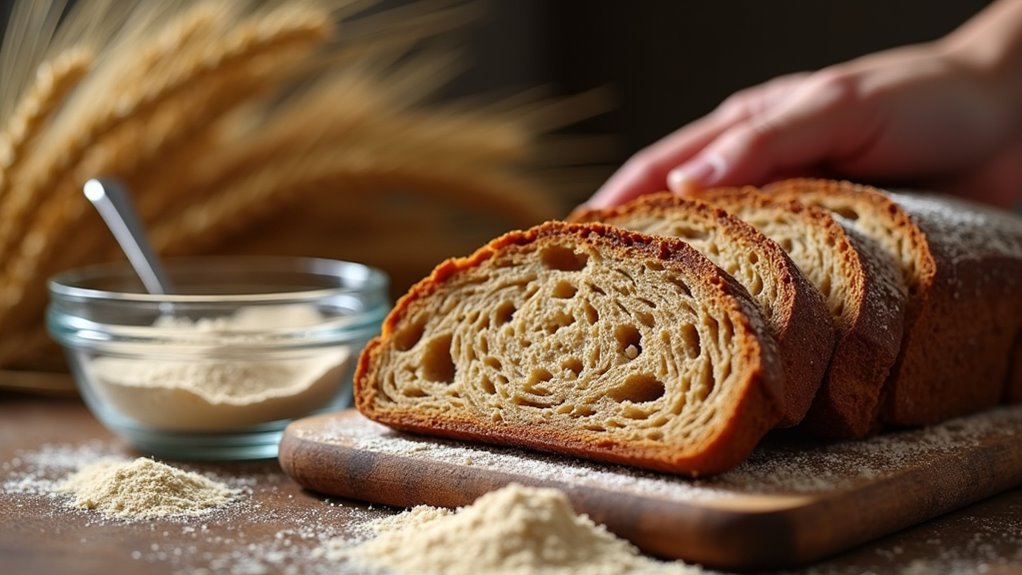
Although rye flour comes in various types, choosing the right one can greatly influence your bread’s flavor, texture, and appearance. When adjusting rye flour usage, consider extraction rates and the flour’s characteristics. White rye, with low extraction rates, yields lighter loaves and a subtle rye flavor, perfect if you want a delicate crumb.
Medium rye strikes a balance between hearty flavor and lighter texture, thanks to moderate bran content, making it versatile. If you prefer a robust, dense bread, dark rye flour—milled from the whole kernel—offers that traditional taste and texture. For rich, moist breads like pumpernickel boules, pumpernickel flour’s coarse texture and assertive flavor are ideal.
Frequently Asked Questions
What Kind of Flour for Rye Bread?
You’ll want to use rye flour for rye bread, and the type depends on the flavor and texture you’re aiming for. If you want a lighter loaf, go with white rye flour. For a balanced taste and texture, medium rye is great.
Dark rye flour gives you a denser, stronger flavor, while pumpernickel flour offers a coarser, richer loaf. Choose based on how robust or mild you want your bread to be.
Can You Make Rye Bread Without Rye Flour?
You can’t really bake rye bread without rye flour—it’s like trying to paint a sunset without the right colors.
Sure, you can use wheat or other flours, but your loaf won’t have that deep, earthy flavor or dense texture that rye brings.
If you want something close, mixing a bit of rye flour with wheat helps maintain some character.
Without rye flour, it’s just bread, not true rye bread.
Is Rye Flour Different From Regular Flour?
Yes, rye flour is different from regular wheat flour. You’ll notice it has less gluten, which means your bread won’t rise as much and will be denser. It also contains more bran and minerals, giving your rye bread a stronger flavor and chewier texture.
Plus, rye flour absorbs water differently and can make your dough proof faster, giving your bread that unique sour tang you love.
Why Is My Rye Bread so Dense?
You might think your rye bread’s density is just how it is, but it’s actually due to rye flour’s unique properties. Rye flour lacks the strong gluten that wheat flour has, so it doesn’t trap air well, making the bread denser. Also, pentosans absorb water, thickening the dough and limiting rise.
To lighten it up, try blending rye with bread flour or carefully control fermentation to avoid a gummy texture.
Conclusion
When you choose rye flour for your bread, you’re inviting a subtle complexity that’s not just about taste but character. It’s a gentle reminder that baking isn’t always about perfection—it’s about embracing the unique textures and flavors that come with a little unpredictability.
So, don’t shy away from blending or adjusting rye flour; instead, welcome the deliciously understated charm it brings to your loaf, making every bite a quietly bold experience.